
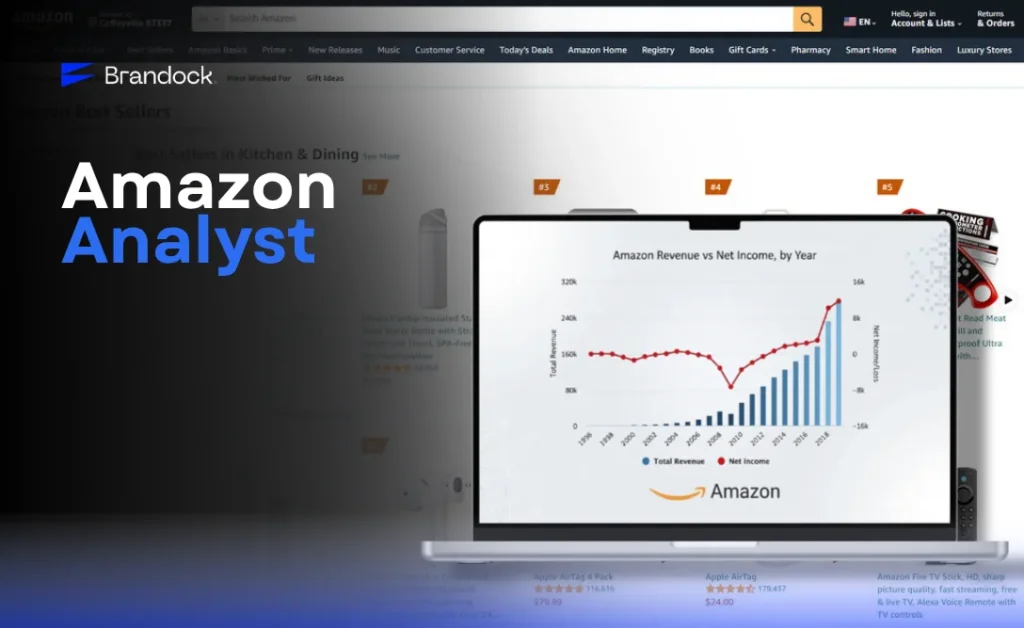
If your store gets attention but inconsistent results, an Amazon analyst can show where sales are leaking and what to fix first. For growth-stage teams, clear performance visibility turns scattered numbers into smarter listing, PPC, and inventory decisions.
Brandock the Amazon automation agency, sees this role as the link between raw marketplace data and practical action.
What Is an Amazon Analyst?
This role reviews sales, traffic, ads, pricing, stock, and competitor movement to explain performance clearly. At its best, the job connects insight to action so teams know what to change next, not just what happened last week.
For E-commerce managers, Amazon sellers, data analysts, and business owners, hiring language often overlaps with Amazon analyst jobs, Amazon analyst jobs remote, data analyst Amazon, and Amazon data analyst jobs work from home. Role names vary in the market, but the business need is usually the same
Core Responsibilities of an Amazon Analyst
The role matters because numbers only help when they point to action. As an Amazon automation services partner, Brandock uses decision-first reporting so teams can spot change, explain it, and respond faster.
An Amazon analyst relies on campaign reporting to evaluate impressions, clicks, attributed sales, and deeper advertising trends that shape smarter PPC decisions.
Monitoring Sales Performance
Track performance by ASIN, variation, and period so real demand is separated from short spikes. A clean sales read helps teams back winners with confidence.
Analyzing Product Listings and Conversion Rates
Review content like images, titles, copy, pricing, and session-to-order behavior together. This conversion-focused review shows whether traffic or persuasion is the bigger issue.
Reviewing Keyword and Search Performance
Map ranking shifts and query intent against listing and ad changes. A search behavior lens exposes visibility gaps before they get expensive.
Tracking Advertising Campaign Results
Compare spend, sales, TACoS, and wasted queries instead of relying on one metric. That spending discipline keeps scaling tied to margin.
Identifying Inventory and Demand Trends
Watch sell-through, stock cover, and lead times against seasonal demand. Strong inventory awareness keeps high-potential products available.
Competitor and Market Analysis
Track price moves, review growth, and assortment changes across rivals. A market context check helps teams respond with strategy, not panic.
Table 1. Responsibility areas and payoff
Key Metrics an Amazon Analyst Tracks
Good reporting is selective because too many numbers hide the real story. Focused metric selection keeps weekly reviews practical and decision-ready.
Sales and Revenue Metrics
Watch ordered sales, units, average order value, and margin together. This full-funnel view shows whether growth is actually profitable.
Traffic and Conversion Metrics
Pair sessions, click-through rate, and conversion rate in one read. A balanced traffic view prevents teams from fixing the wrong problem.
PPC Advertising Metrics
Review TACoS, ACoS, CPC, and ROAS against business goals. That campaign accountability makes ad budgets easier to defend.
Inventory Performance Metrics
Measure days of cover and sell-through against promotions and seasonality. The stock health view protects revenue continuity.
Customer Feedback and Review Metrics
Read review themes and return reasons besides conversion trends. This voice-of-customer context often reveals friction faster than a dashboard.
Table 2. Metrics that guide weekly decisions
| Metric Group | Answers | Decision |
|---|---|---|
| Sales + margin | Worth scaling? | Push or protect |
| Traffic + CVR | Visibility or persuasion? | Rank or listing fix |
| PPC efficiency | Profitable demand? | Raise or trim bids |
| Inventory health | Can demand be filled? | Restock or slow spend |
| Reviews + returns | What hurts trust? | Fix promise or product. |
Key Skills Every Amazon Analyst Should Have
Automation can speed tasks, but it still takes judgment to diagnose root causes. Brandock values commercial thinking with technical fluency, so analysis leads to actions that make business sense.
Analytical and Reporting Skills
Strong analysts can structure dashboards, isolate anomalies, and explain trends simply. That reporting clarity helps teams move faster.
Amazon Platform Knowledge
They understand catalog structure, fees, suppressions, and buy-box dynamics. Real platform fluency keeps recommendations grounded.
PPC and Keyword Research Expertise
They can read intent, match types, placements, and waste without oversimplifying. This paid-search competence reduces spend leakage.
Market and Competitor Research Skills
They compare price, assortment, and review momentum across rivals. That competitive awareness makes reactions more strategic.
Data Interpretation and Decision-Making
They prioritize the next best move instead of listing every issue. Good decision discipline keeps teams focused.
Table 3. Skills and tools in practice
| Skill | Tool | Use |
|---|---|---|
| Reporting | Seller reports | Spot trends |
| Keywords | Query tools | Find gaps |
| PPC | Campaign reports | Trim waste |
| Inventory | Forecast sheets | Protect stock |
| Competitors | Marketplace scans | Benchmark moves |
Need clearer reporting before your next review?
Get a sharper view of listings, ads, and inventory so decisions feel less reactive.
How an Amazon Analyst Impacts Your Sales
When analysis is tied to execution, Brandock can turn findings into listing tests, bid shifts, and restock plans. That tight feedback loop is where analysis starts shaping revenue.
Improving Product Visibility
Better keyword mapping helps teams focus content and ad spend on terms that matter. That visibility lift improves discovery by the right shopper.
Increasing Conversion Rates
Analysis shows whether price, images, copy, or reviews are hurting performance. A conversion-first fix can lift revenue without more traffic.
Supporting Better Inventory Decisions
Demand patterns tied to promotions and seasonality help teams stock smarter. That forecast alignment lowers the risk of stockouts and drag.
Strengthening Overall Profitability
When pricing, ad efficiency, conversion, and stock health improve together, margins improve too. The profitability effect comes from coordinated decisions.
Table 4. Symptoms and analyst-led responses
| Symptom | Cause | Response |
|---|---|---|
| High traffic, low orders | Weak persuasion | Fix listing |
| Rising spend, flat return | Budget leakage | Tighten terms |
| Frequent stockouts | Poor forecast | Rebuild the demand plan |
| Short sales spikes | Promo noise | Separate baseline |
| Mixed team opinions | No shared logic | Create KPI cadence |
Signs Your Business Needs an Amazon Analyst
You likely need deeper analytical support when teams debate symptoms but cannot isolate causes. Repeated uncertainty around spend, stock, or conversion is usually the clearest clue. Brandocks team can help you with their expert advice in this regard.
- Signal Mismatch: If traffic is rising while conversion stays flat, you likely need better listing diagnosis.
- Efficiency Drift: If ad spend climbs faster than attributed sales, the account may be scaling noise.
- Inventory Timing Gap: If top products keep going out of stock during peaks, demand planning is underpowered.
- Misdiagnosed Feedback: If review complaints repeat but teams keep changing bids, the real issue may be the offer.
- No decision-ready dashboard: If weekly meetings end with more opinions than decisions, reporting is not doing enough.
Frequently Asked Questions
This role studies sales, traffic, PPC, listings, reviews, and stock data to explain performance clearly. The aim is to make better commercial decisions that improve efficiency and revenue.
Sales improve when teams diagnose visibility gaps, listing friction, wasted spend, and stock risk faster. That problem-solving speed helps fix the right issue sooner.
Strong candidates combine marketplace knowledge, reporting ability, keyword and PPC fluency, and judgment. The best mix is technical accuracy plus business context, so recommendations stay useful.
Smaller teams may not need a full-time specialist, but they still need disciplined analysis. Even lean operations benefit from clear weekly reviews as spend and stock decisions get harder.
An analyst usually focuses on measurement and diagnosis, while a consultant may own broader strategy and execution. The strongest setups create tight collaboration between insight and action, so decisions move faster.
Conclusion
An Amazon analyst helps brands understand what is happening across listings, PPC, inventory, and customer response without getting lost in noise. With the right analytical discipline in place, teams can protect margin and improve conversion. Brandock supports that process by pairing marketplace insight with practical automation and execution.
Ready to make sales reviews more useful?
Build a reporting rhythm that turns marketplace data into faster, smarter commercial decisions.

 Generating Millions in
