
Selling on Amazon can significantly transform your financial future. In 2025, over 55,000 sellers made more than $1 million in sales. The stats show that 46% of Amazon sellers achieve an average FBA success rate of 11-25%, and 64% become profitable within 12 months. Many of these sellers started with little experience and capital.
With Brandock’s step-by-step guide, you can choose a business model, find profitable products, create optimized listings, and make your first sale — even without inventory or prior experience.
Key Points: How to Start an Amazon Business
Starting an Amazon business in 2026 is more accessible than ever, and with Brandock’s step-by-step guide, you can dive into the world of e-commerce with ease. Follow this simple yet effective guide to build your Amazon empire.
- Choose a business model that fits your budget and goals.
- Research products thoroughly before listing.
- Create optimized listings to boost visibility and increase conversions.
- Use PPC campaigns to drive early sales and gain traction quickly.
- Focus on delivering excellent customer service for long-term success.
- Reinvest your profits to scale and grow your Amazon business efficiently.
Why Start an Amazon Business in 2026?
Before diving into details about how to start an Amazon business, let’s first discuss why you should start an Amazon business
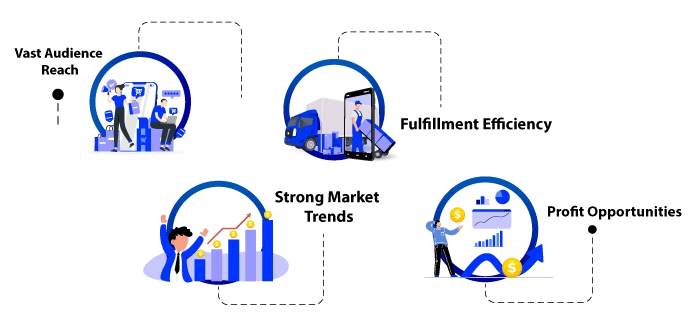
Vast Audience Reach
Amazon attracts billions of monthly visits, providing instant exposure to global shoppers without heavy marketing costs. Prime members drive fast sales through trusted two-day shipping, boosting conversions for FBA products.
Fulfillment Efficiency
FBA handles storage, packing, shipping, and customer service, freeing sellers to focus on scaling and branding. New credits for expanded FBA selections reward early movers in 2026.
Strong Market Trends
Categories like smart home devices, personalized products, beauty, and pet supplies show high growth potential with repeat purchases. E-commerce demand remains robust, favoring branded, high-ticket items over volume sales.
Profit Opportunities
High margins in niches like electronics accessories and health products persist amid competition, aided by tools for SEO and advertising. Sellers can build long-term assets via Amazon’s brand-building features and customer loyalty.
Understanding Amazon Business Models
Before diving in, choose the right selling model for your situation.
| Business Model | Startup Cost | Pros | Cons |
|---|---|---|---|
| FBA | $500–$3,000 | Prime eligibility, hands-off fulfillment | Upfront cost, storage & fulfillment fees |
| FBM | Minimal | Full control, no FBA fees | No Prime, more work |
| Dropshipping | $0–$500 | Zero inventory, start fast | Lower margins, less control |
| Print-on-Demand | $0 | No inventory, automatic fulfillment | Competitive, lower profit |
| Private Label | $2,000–$5,000+ | High margins, brand equity | Requires research, quality control |
How to Start an Amazon Business: 7-Step Process
Many newcomers wonder how to start an Amazon business. Thankfully, you don’t need experience or massive capital. With Brandock’s proven Amazon automation systems, beginners can follow this 7-step process to success.
Step 1: Create Your Amazon Seller Account
Creating your Amazon Seller account is the first step in starting your Amazon business.
Choose Your Account Type & Setup Your Account
- Individual Plan: Ideal for those selling fewer than 40 items per month. It costs $0.99 per item sold.
- Professional Plan: Best for sellers looking to scale. It costs $39.99/month and includes advanced analytics, bulk listing tools, and advertising options.
Pro Tip: Choose the Professional Plan if you’re serious about building your Amazon business.
Registration Requirements
You’ll need:
- Government-issued ID (driver’s license or passport)
- Bank account for payments
- Credit/debit card for fees
- Tax information (SSN or EIN)
- Phone number for verification
Sign-Up Process
- Visit sell.amazon.com
- Click “Sign up” and choose your plan
- Enter business information
- Provide payment details
- Complete identity verification (video interview)
- Submit bank account details
- Wait for approval (typically 24-48 hours)
Brandock recommends the Professional Plan for serious sellers.
Ready to start selling on Amazon without hassle?
Let Brandock handle your complete seller account setup.
Step 2: Research Profitable Products
Product selection determines your success. Here’s how to find winners:
Use Product Research Tools
Free options:
- Amazon Best Sellers list
- Customer reviews (look for complaints to improve upon)
- Google Trends for demand validation
Paid tools (highly recommended):
- Jungle Scout ($29-$84/month)
- Helium 10 ($29-$229/month)
- AMZScout ($49.99/month)
Product Selection Criteria
Look for products with:
- Monthly sales: 300+ units
- Price range: $15-$50 (optimal profit margins)
- Competition: Fewer than 100 reviews on top listings
- Size/weight: Small and lightweight (lower fees)
- Seasonal stability: Year-round demand
- Profit potential: 30%+ margins after all costs
Red Flags to Avoid While Choosing Products
- Trademarked or patented products
- Heavily saturated markets (thousands of similar listings)
- Products requiring approval (supplements, topicals)
- Fragile or easily damaged items
- Seasonal-only products
- Items with consistent negative reviews
Product Validation Process
- Search for your product idea on Amazon
- Analyze the top 10-20 listings
- Check monthly sales using research tools
- Calculate estimated costs and profits
- Verify supplier availability
- Order samples before committing
Step 3: Source Your Products
Option A: Alibaba (For Private Label/FBA)
Process:
- Search for manufacturers on Alibaba.com
- Filter by “Trade Assurance” suppliers
- Request quotes from 5-10 suppliers
- Compare pricing, MOQ (minimum order quantity), and terms
- Order samples ($50-$200)
- Negotiate pricing and payment terms
- Place your first order
Negotiation tips:
- Start with 30-50% below the asking price
- Request bulk discounts
- Ask for product customization (your branding)
- Confirm shipping terms (FOB vs. DDP)
Option B: Domestic Wholesalers
Benefits:
- Faster shipping
- Easier communication
- Better quality control
- Lower MOQs initially
Where to find them:
- Wholesale Central
- SaleHoo
- Worldwide Brands
- Trade shows
Option C: Dropshipping Suppliers
For selling without inventory:
- SaleHoo
- Doba
- Wholesale2B
- CJDropshipping
- Spocket
Key requirements:
- Verify reliability (check reviews)
- Confirm fast shipping (2-5 days)
- Test order quality yourself
- Ensure they follow Amazon’s policies
Step 4: Create Winning Product Listings
Your product listing determines whether customers choose to buy from you or your competitors. Brandock recommends:
Product Title (200 characters):
- Brand name + key features + benefits
- Include main keywords naturally
- Format: Brand | Product Type | Key Feature | Size/Quantity | Use Case
Example: “GloWell Premium Yoga Mat | Extra Thick 6mm Non-Slip Exercise Mat | Eco-Friendly TPE Material | Perfect for Home Workouts & Hot Yoga”
Bullet Points (5 maximum):
- Focus on benefits, not just features
- Address customer pain points
- Use power words (premium, proven, guaranteed)
- Keep each point 200 characters or less
Product Description:
- Tell your brand story
- Expand on key benefits
- Include use cases and scenarios
- Add keywords naturally (no stuffing)
- Use proper formatting (paragraphs, spacing)
Images (minimum 7):
- Main image: White background, professional
- Lifestyle images: Show product in use
- Infographic: Highlight key features
- Size comparison: Show dimensions
- Packaging: Display what customers receive
- Detail shots: Zoom in on quality
Backend Keywords:
- Use all 250 bytes available
- Include synonyms and alternate spellings
- Add competitor brand names (carefully)
- No repetition from title/bullets
Listing Optimization Tools
- Helium 10 Scribbles (keyword tracking)
- AMZScout AI Listing Builder
- MerchantWords (keyword research)
Your product deserves more than a basic listing.
Brandock builds data-driven Amazon listings designed to outperform competitors and increase conversions.
Step 5: Price Your Products Strategically
Profit calculation is crucial. When planning how to start an Amazon business, knowing break-even and pricing strategies ensures sustainable growth.
Break-Even Point Calculation Formula: Product Cost + Shipping + Amazon Fees + Packaging = Total Cost
Example breakdown for a $25 product:
- Product cost: $5.00
- Shipping to Amazon: $1.50
- Amazon referral fee (15%): $3.75
- FBA fulfillment fee: $3.50
- Packaging/prep: $0.50
- Total cost: $14.25
- Profit per unit: $10.75 (43% margin)
Pricing Strategies
Launch strategy:
- Price 10-20% below competitors
- Build reviews and velocity
- Gradually increase the price
Competitive strategy:
- Match or slightly undercut top sellers
- Emphasize value through reviews
Premium strategy:
- Price 20-30% above competitors
- Justify with superior quality/features
- Build strong brand perception
Step 6: Launch Your Product
Pre-Launch Checklist
- Inventory received at the Amazon warehouse
- Listing optimized and live
- Initial PPC campaign created
- Launch promotions ready
Launch Day Strategy
First 7 days:
- Run aggressive Amazon PPC campaigns ($20-50/day budget)
- Offer a limited-time discount (10-20% off)
- Drive external traffic (social media, email list)
- Request early customer reviews (within TOS)
First 30 days:
- Monitor keyword rankings daily
- Adjust PPC based on performance
- Respond to every customer inquiry within 24 hours
- Optimize listing based on data
Pro tip: Use the Amazon Vine program (if eligible) to generate authentic early reviews.
Step 7: Drive Traffic and Sales
Brandock advises combining Amazon PPC, influencer marketing, and external traffic. Beginners asking how to start an Amazon business often miss this step.
Amazon PPC Advertising
Sponsored Products:
- Automatic campaigns (let Amazon target)
- Manual campaigns (specific keywords)
- Budget: Start with $10-20/day
- Target ACoS: 25-35% initially
Sponsored Brands:
- Showcase your brand logo
- Requires brand registry
- Higher visibility in search
Sponsored Display:
- Retarget customers who viewed your product
- Target competitor product pages
Ready to get sales from Amazon ads?
Brandock builds data-driven Amazon listings designed to outperform competitors and increase conversions.
External Traffic Sources
- Instagram/TikTok content
- Facebook groups
- YouTube product reviews
- Email marketing
- Influencer partnerships
- Pinterest pins
- Blog content
Pro strategy by Brandock: Give influencers your product for free in exchange for honest reviews and social posts.
Promotions and Deals
- Lightning Deals (limited-time offers)
- Coupons (5-20% off)
- Prime Exclusive Discounts
- Buy One Get One (BOGO)
- Bundle deals
Need Help Starting an Amazon Business?
Brandock helps beginners launch faster with proven Amazon systems.
How to Sell on Amazon Without Inventory
If you don’t want to keep stock, there are several ways to start selling on Amazon with little to no upfront investment.
Method 1: Retail Arbitrage
How it works:
Buy discounted products from local retail stores and resell them on Amazon for a profit.
Where to source:
- Walmart clearance sections
- Target markdowns
- TJ Maxx / Marshalls
- Thrift stores
- Liquidation centers
Tools needed:
- Amazon Seller App (to scan products)
- Inventory Lab (for tracking profits)
Budget & Profit:
- Initial budget: $200–$500
- Typical profit margin: 20–40%
Method 2: Online Arbitrage
How it works:
Buy discounted products online and resell them on Amazon.
Best sources:
- Walmart.com clearance
- Overstock.com
- eBay wholesale lots
- Slickdeals for deals
Tools to help:
- Tactical Arbitrage (automates product search)
- Keepa (track price history)
- RevSeller (Chrome extension for profit calculations)
Method 3: Amazon Dropshipping
Key rules:
- You must be the seller of record
- Remove supplier branding and add your own
- Fast shipping (3–5 days max)
- Handle all customer service
Best dropship suppliers:
- Modalyst
- Spocket (US/EU suppliers)
- CJ Dropshipping
- Wholesale2B
Tip by Brandock: Focus on reliable suppliers to avoid late shipments and negative reviews.
Method 4: Print-on-Demand (POD)
What it is:
Create custom designs and sell products without holding stock. Products are printed only when someone orders.
Platforms to use:
- Merch by Amazon (direct)
- Printful (external integration)
- Printify
- Teespring
Best products to sell:
- T-shirts, hoodies, apparel
- Coffee mugs, tote bags
- Phone cases, wall art, notebooks
Design tips:
- Target niche communities
- Make evergreen designs (long-lasting appeal)
- Avoid copyrighted content
- Test multiple design variations
Method 5: Kindle Direct Publishing (KDP)
What you can sell:
- eBooks
- Paperbacks & Hardcovers
- Audiobooks (via ACX)
Royalty rates:
- eBooks: 35% or 70% (depending on price)
- Paperbacks: 60% (after printing costs)
Pro tip: Focus on profitable niches like:
- Self-help
- Business & entrepreneurship
- Romance or fiction
Quick Tip by Brandock for All Methods:
Even without inventory, your success depends on:
- Choosing the right product/niche
- Offering a great customer experience
- Pricing strategically
- Using tools to save time and avoid mistakes
Latest Amazon Seller Fees Breakdown
Amazon seller fees in 2025 consist of subscription plans, referral fees, fulfillment costs, and other charges that can total 15-25% of each sale.
| Fee Type | Details | Cost / Range | Notes |
|---|---|---|---|
| Subscription Plans | Professional plan for high-volume sellers; Individual plan for <40 sales/month |
Professional: $39.99/month Individual: $0.99/item |
Professional includes bulk tools & analytics |
| Referral Fees | The percentage of the sale price varies by category | 8–45% (avg 15%) | Minimum fees may apply (e.g., $0.30 electronics) |
| Fulfillment Fees (FBA) | Picking, packing, shipping + storage costs |
$3–8/unit Storage: $0.75–2.40/cu ft monthly $6.90 after 365 days |
Includes handling & storage |
| Other Costs | High-volume listings, ads, promotions | $0.005/ASIN over 100,000 + variable | Advertising costs vary by campaign |
7 Mistakes New Amazon Sellers Make (And How to Avoid Them)
New Amazon sellers often fail due to avoidable errors in product selection, listings, and compliance. It can lead to low sales or account suspensions.
1. Poor Policy Compliance
Skipping Amazon’s rules causes suspensions; review all policies for your category before launching. Verify your account thoroughly and avoid multiple accounts without approval.
2. Wrong Product Choice
Picking oversaturated items or unvalidated products wastes capital; use data tools to check demand and competition. Avoid personal bias—focus on niches with steady sales potential.
3. Weak Listing Optimization
Subpar titles, images, and keywords bury listings; optimize with relevant terms and high-quality visuals. Include A+ content and backend keywords for better search rankings.
4. Review Manipulation
Paying for fake reviews risks permanent bans; use Amazon’s Request a Review button ethically. Build genuine feedback through quality products and follow-up.
5. Ad Spend Mismanagement
Overspending on unoptimized PPC early leads to losses; start small with auto campaigns and scale based on data. Track ACOS and refine targeting for profitability.
How to Scale an Amazon Business?
Signs to Scale:
- 100+ sales/month consistently
- Positive cash flow ≥3 months
- Reviews ≥4.0 stars
- Understanding unit economics
Growth Strategies:
- Expand product line (bundles, variations)
- Build your brand (Brand Registry, A+ content)
- Optimize operations (virtual assistants, automation)
- Diversify sales channels (Shopify, eBay, Walmart)
- Increase marketing (PPC, influencers, email)
Pro Tip by Brandock: Focus on one growth area at a time. Expanding too quickly without infrastructure can hurt your business. Gradually implement these strategies while monitoring performance to ensure sustainable growth.
What are the risks of selling on Amazon?
- Amazon is both the market and the seller, limiting direct customer relationships for third-party sellers.
- Amazon owns your customer data, restricting access to valuable insights.
- Account suspensions or bans can occur at any time, risking business disruption.
- Amazon competes with sellers by offering its own branded products, impacting visibility and sales.
- Key advantage: Amazon’s vast global reach provides access to millions of potential customers.
FAQs: How to Start an Amazon Business
Yes, beginners can earn $1,000/month with the right products, consistent listings, and early marketing. Success depends on product selection, pricing, and customer service.
Not initially. You can start as a sole proprietor, but forming an LLC is recommended once profitable for tax benefits, liability protection, and credibility.
Amazon fees vary by category: referral fees (8–45%), plus FBA fulfillment ($3–$8/unit) if using FBA. On average, expect $15–$25 per $100 sale after all fees.
Yes, it’s possible with the right strategy. Sellers using FBA private labels, multiple products, and effective PPC campaigns can earn $10,000+/month.
Yes, many entrepreneurs are succeeding by using Amazon’s platform. You can start dropshipping on Amazon with no upfront cost by setting up a free individual seller account and paying only a small fee per item sold.
Amazon FBA is a service where Amazon stores, ships, and handles customer service for your products.
Wrapping Up
Learning how to start an Amazon business with Brandock isn’t about having perfect products or unlimited funds. It’s about taking action, learning from experience, and growing your business.
Your journey to success on Amazon begins today.
Take the first step with Brandock and start building your Amazon business!

 Generating Millions in
